01 · ContextSecond codebase

What does the existing system remember?
A fast new component meets the decisions and dependencies already buried in the codebase.
Editorial lens: inherited context, not a literal software model.An AI4DEV visual comparison for review
AI can make a first pass faster. A team still has to understand its system, examine alternatives, test its assumptions, decide where an agent may act, and carry the result together. These ten original illustrations explore different parts of that decision.
How to read this portfolio
The images are conceptual analogies, not depictions of software, customers, a live demonstration, or promised results. They are candidates for Howard's manual Event-page decisions, TicketSpice artwork, and the owned AI4DEV reading tree. No image is a selected creative winner. The crop control below previews likely cover treatments; the source PNGs remain unchanged.
Visual hypotheses
A fast new component meets the decisions and dependencies already buried in the codebase.
Editorial lens: inherited context, not a literal software model.
Several possible forms stay open before a team commits engineering effort.
Qualitative lower-effort possibility; no measured saving or live prototype exercise.
Explanation, a test, and a dependency view surround one proposal; acceptance is still a human decision.
No coverage target, certification, or quality guarantee.
A bright first artifact reaches integration and release work that still demands inspection.
Panoramic master; check side-crop before using as an Event cover.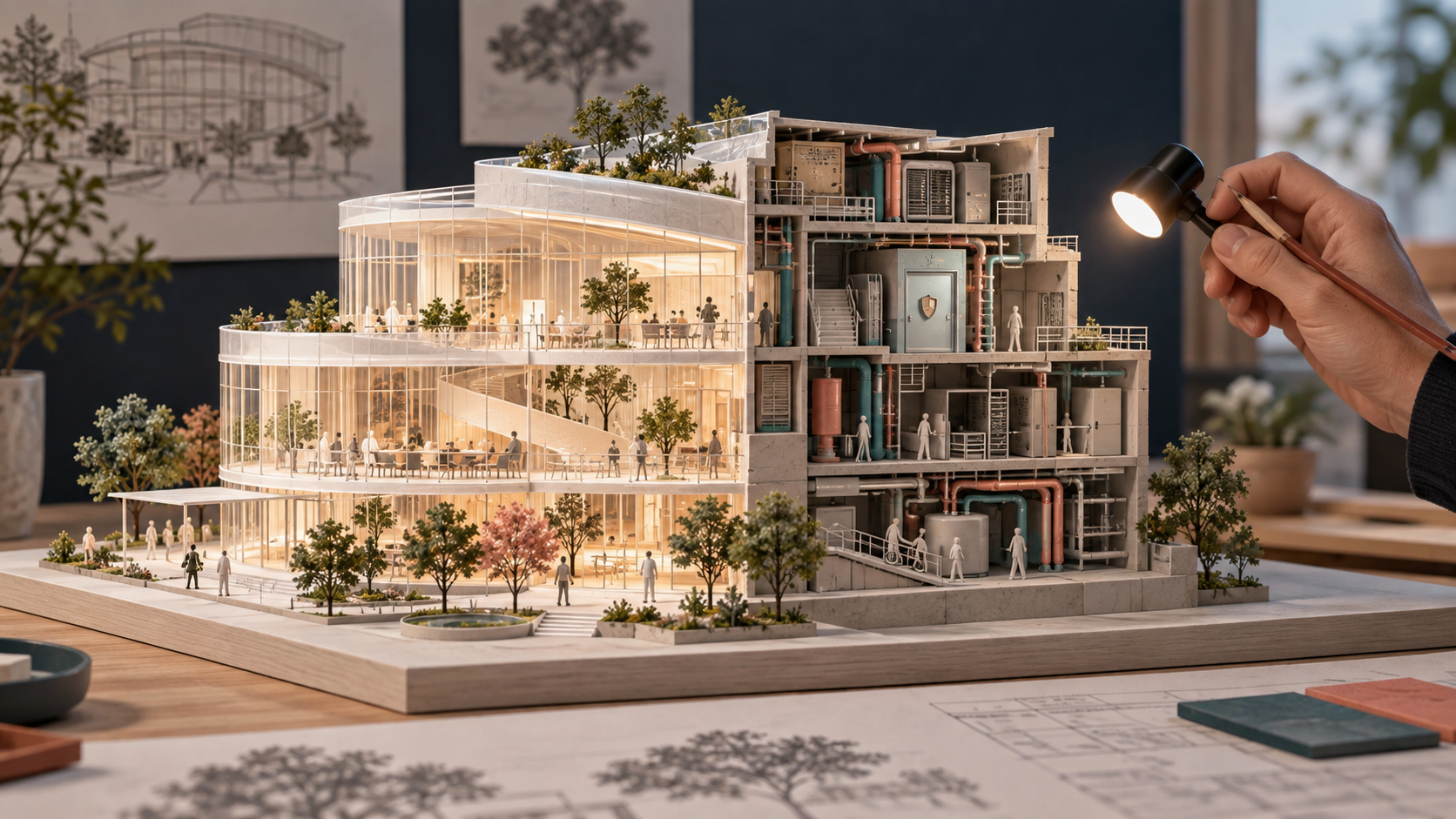
An attractive prototype opens a conversation while the supporting work remains visible.
Conceptual analogy; no claim that the seminar builds or audits a product.
A human sets the reach boundary and keeps recovery in view.
A decision lens, not a deployment plan or safety certification.
Small independent acts connect; the place for a deliberate shared choice stays open.
Neither workers nor leaders are cast as villains.
Technical dependencies and human consequences meet over one model.
The illustration does not promise a custom team exercise.
Two matching projections can overlook the same exception in the actual system.
A false-confidence possibility, not a claim about every generated test.
Different lenses expose different details; the team still has to judge the whole.
No vendor ranking or claim that one lens is universally best.The actual offer
AI4DEV is Howard Pearlmutter's live online seminar on Thursday, December 17, 2026, 2–4 p.m. Mountain Time. One admission is $250. The event-specific TicketSpice page carries the current ticket and buyer form.